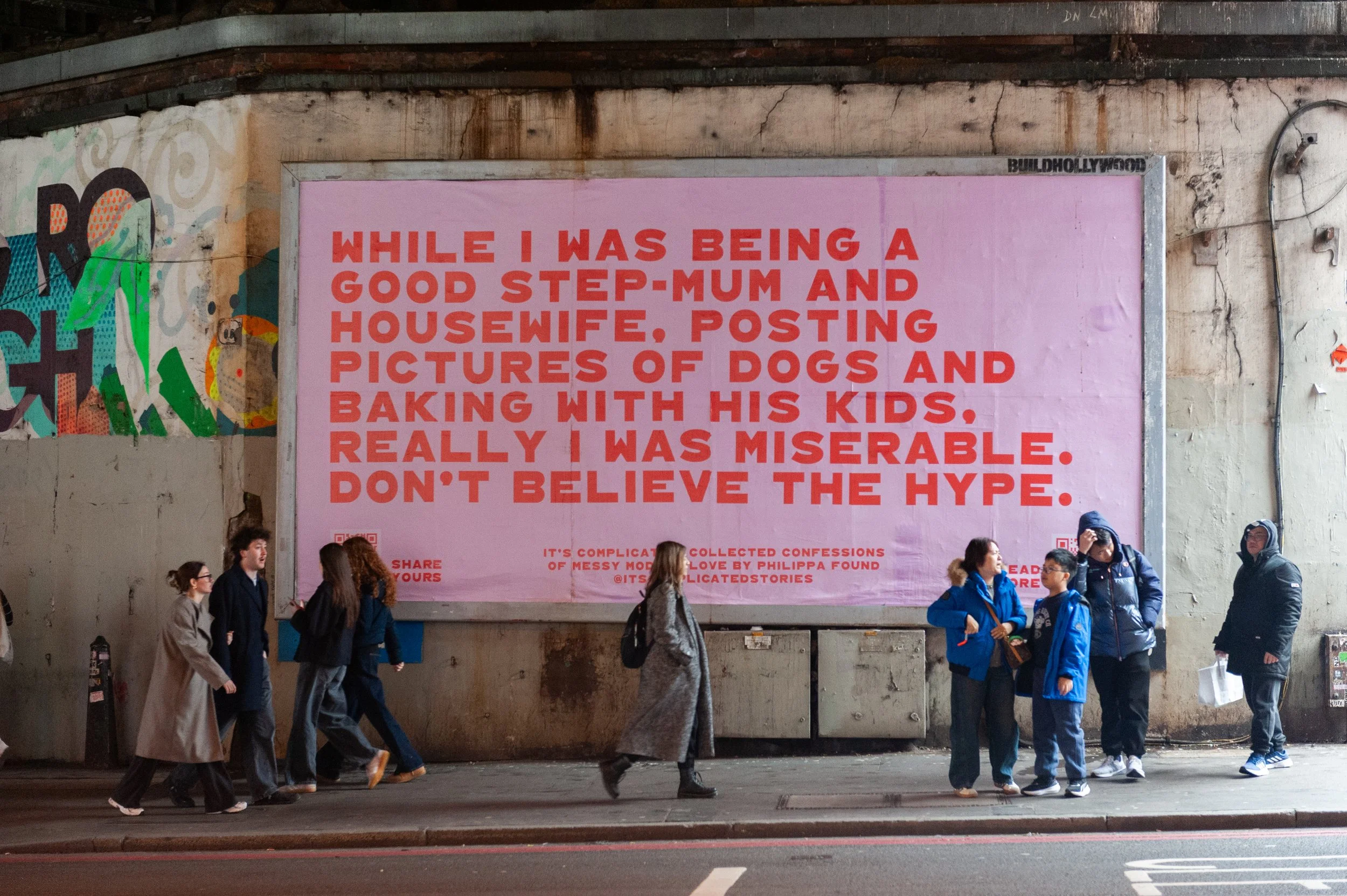
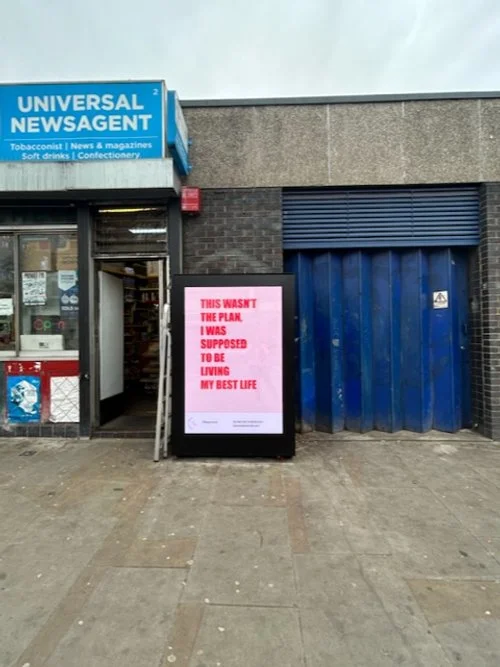
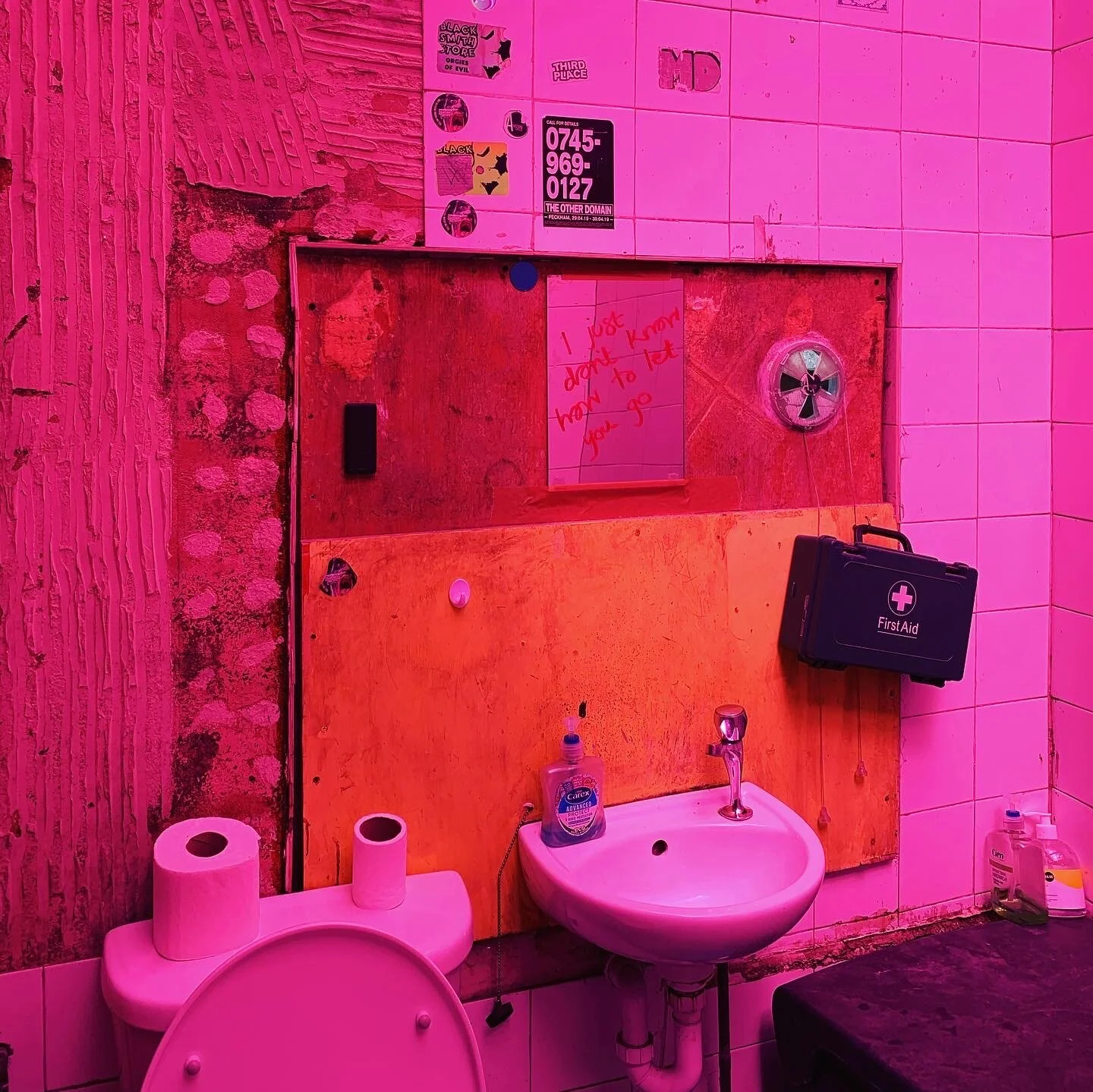
True relationships confessions go on display on billboards across London in a subversive Valentine’s exhibition.
Confessions of relationships - stories of falling out of love, faking happiness on social media, and knowing the person you’re sharing your life with is not the love of your life - are coming to billboards across London this February in a subversive Valentine’s display of the messy reality of love.
Locations:
9th February - 11th March 2026
Camden Town Station, NW1 (until 25 Feb)
Telephone Building, Tabernacle Street (until 15 Feb)
American Car Wash, 35 Great Eastern Street, EC2A 3ER (until 20 Feb)
Kingsland Bridge, 7-11 Kingsland Road, E2 8DD (until 24 Feb)
Clerkenwell Road, EC1M 5NP (Until 24 Feb)
London Bridge, Borough High Street, SE1 9QG (until 24 Feb)
Clapham Common, 169 Clapham High Street, SW4 7ST (until 24 Feb)
New Cross Gate Station, SE14 6AA (until 27th Feb)
Caledonian Road Station (until 24th Feb)
The Platform, 1 Quaker Street, E1 6SZ (20-23.2.26)
142 Northcote Road, SW11 6RD until 26th Feb
Great Suffolk Street (story 1, 20- 27th Feb)
Vinegar Yard, 1 St Thomas Street, London Bridge, SE1 28th Feb - 9 March
199 New Cross Road, SE14 5DH, UNTIL 9th March
These stories, submitted anonymously by members of the public, will be displayed across ten sites – reminding passers by that relationships aren’t always as happy as we’re imaging them to be. If Valentine’s Day triggers you, this is for you.
Interjecting peoples private confessions in public spaces, the exhibition collapses the binary of public and private, and the hierarchy of the traditional exhibition space. By using the city as a gallery, the exhibition seeks to embody the idea that art is for and can represent everyone - not just those traditionally represented in literature or on gallery walls. Platforming secret confessions in monumental scale, brings the realities of love that we don’t publicly share into the light, to normalise them and counter shame.
This is feminist art intervention and activist storytelling that reveals - not the glossy, curated highlights of love we share on instagram, but the darker more vulnerable reality we keep hidden.
Project creator, artist Philippa Found says, ‘I believe that one of the most radical, feminist acts we can do is to share our true stories - especially those narratives and perspectives that are silenced. When we give those space, we contribute to creating a more truly representative narrative.
In my participatory project, Lockdown Love Stories and It’s Complicated, I gathered stories of love and relationships that we normally keep hidden. And this Valentine’s Day I am amplifying them, by blowing them up like monuments, presenting them super-sized on billboards across London.
The stories we consume and the stories we tell ourselves are powerful. They shape how we see ourselves and our understanding of the world. At Valentines, the cultural focus is on love. If you’re single, or have recently gone through a break-up or are in a relationship unhappily, Valentine’s Day can be triggering. We project stories of happiness on other couples, which is fed back to us in the performative edits shared on social media. We consume these and conclude we’re missing out on a happiness others have. But that’s just one story.
I wanted to put the other story out there on Valentine’s Day - of the hidden complexities of long term relationships, as well as confessions of the humiliations of contemporary dating - to say to people, this Valentines Day, don’t believe the hype, here’s another side of the story - and make passers, by who might feel triggered or shamed by Valentine’s Day reflect on the stories they are telling themselves.
These stories - the ones we hide, the truths we silence out of shame - are powerful and they deserve to take up space. I can’t wait to see them do that literally and metaphorically this February.’
13 Vacant Retail Sites across London vinyled with Lockdown Love Stories
12th - 30th August 2021 ♥ curated by Philippa Found ♥ Sponsored by Derwent London
1. 29-31 George Street, W1
2. 58 Rathbone Place, W1
3. 22 Tottenham Court Road, W1
4. 11 Howland Street, W1
5. 101 Tottenham Court Road, W1
6. 89 Whitfield Street, W1
7. Blue Star House 234-244 Stockwell Rd, London SW9 9SP
8. Greencoat House, 1 Greencoat Row, Francis St, London SW1P 1DH
9. 5-8 Hardwick Street, EC1R 4RG
10. Tea Building, 56 Shoreditch High Street, E1 6JJ
11. White Collar Factory, 1 Old Street Yard, EC1Y 8AF
12. White Chapel Building, 10 Whitechapel High Street, E1 8QS
13. Brunel Buiding, Canalside Walk, London W2 1DG
Billboard outside Highbury & Islington Station, London, 20th March - 2nd April 2023
Lockdown Love Stories beamed across the DMI tube announcement board on tube platforms on the London underground.
‘In the second national lockdown creating platforms for love and connection is more important than ever At the heart of lockdown love stories was the idea of creating connections in a time of social isolation, and ways of bringing stories to diverse communities to represent their voices through storytelling. I’ve always thought that the Underground is a brilliant potential exhibition space. I’m always looking for ways to infiltrate non-art public spaces with art and writing to reach new audiences. I think there’s a particular anxiety around the tube in this pandemic. It’s usually the heart of London but now is a space of caution and anxiety. I wanted to bring some resonant content to people still travelling during this anxious time and show the human side of this space – and the pandemic.’ Philippa Found.
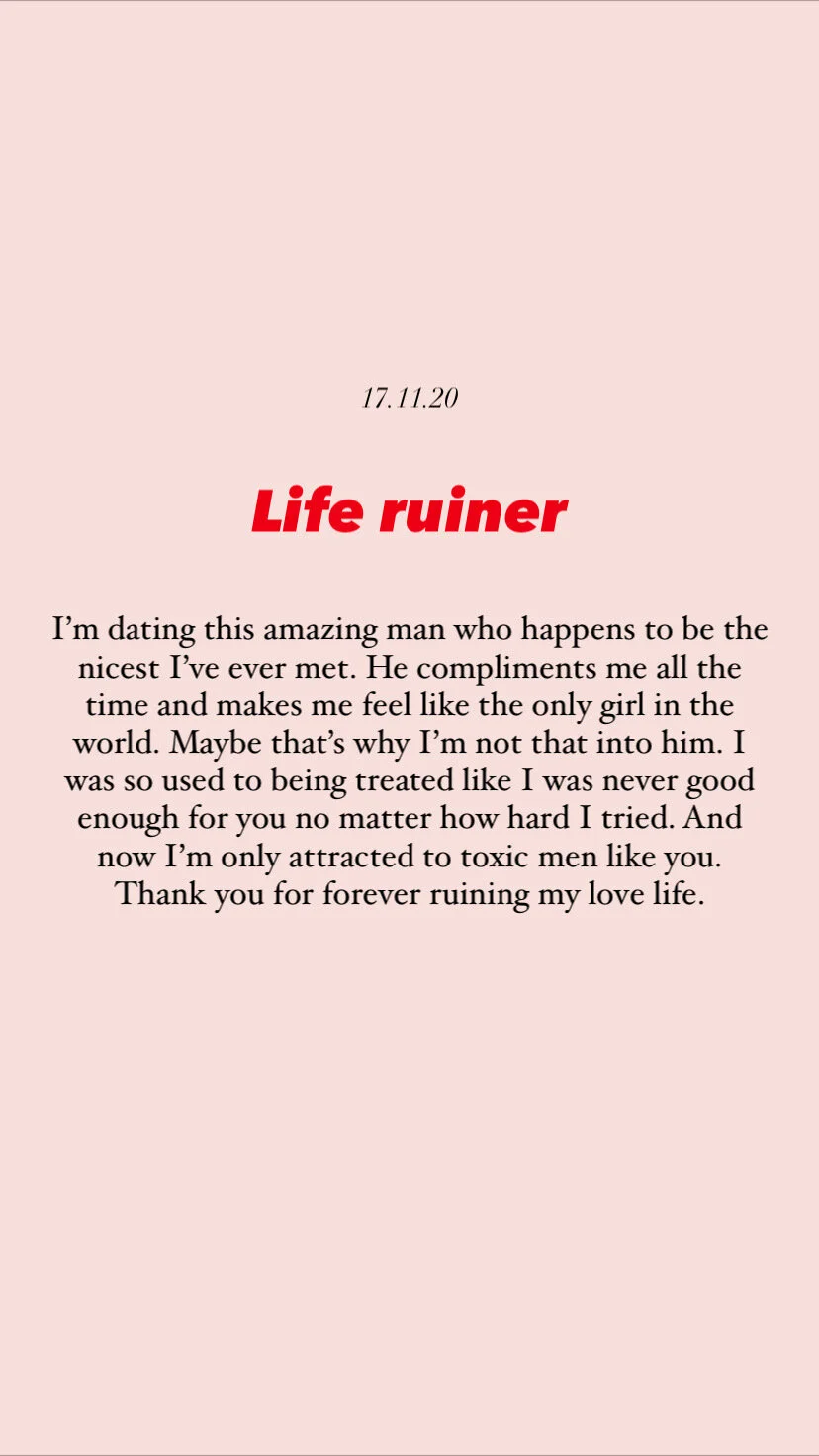
Lockdown Love Stories, participatorary art project, website, 500 anonymously submitted true stories, launched 7th May - ongoing.
Lockdown Love Stories is potentially incredibly isolating, but what’s more isolating is shame. I wanted to show people that whatever they were experiencing emotionally as a consequence of lockdown, they weren’t alone, and needn’t feel ashamed. Lockdownlovestories.com is a website that asked people to anonymously submit their real-life experiences of love in lockdown – whether good, bad or complicated. Since its launch in May, more than 500 stories of falling in love, dating in lockdown, turbo relationships, surviving long term relationships and breaking up have been shared on the site. The project has been featured on ITV’s Lorraine, BBC Radio London, Grazia, The Metro.
When lockdown happened I thought the shift that happens to love and dating will be profound – I wanted to tell that story and tell it in such a way people were able to reveal truths they wouldn’t normally share. So that collectively I could reveal the reality of the experience of love, to normalise the intense emotions that are normally silenced and oppressed through a culture of shaming.
I was anticipating stories of loss, loneliness and heart ache and wanted to create a safe space for people to be able to share their stories and see that what they were experiencing was not abnormal, wrong or shameful. When our real life narratives do not follow the idealized, prescribed course of events often represented in popular culture, we can experience internalized shame. I wanted to show people, it wasn’t them, and they weren’t alone in the complex feelings being triggered at this time.
Having access to regular people's real life private truths gave people a sense of connection, hope and reassurance. If people could find love in this time, then it could happen to them, if people were being ghosted and heartbroken then it wasn’t just them.
Storytelling has a unique capacity to incite empathy and make people feel connected to one another. In lockdown this was more important than ever.
In Lockdown Love Stories I created a space for connection in a time of isolation, a time capsule of this unique moment in our history, and a public monument to love.
By using Instagram as a platform to show this project I took a platform that is synonymous with feeding societies unhealthy culture of comparison by offering unrealistic idealised representations of love and life and instead offered the antidote to that - presenting not ‘look at the idealized curated version of what love looks like’, but instead: ‘this is what the real experience of love feels like.’ The antithesis of Instagram, on Instagram. Normalising the reality of the experience of love.
Visit lockdownlovestories.com to view the full project
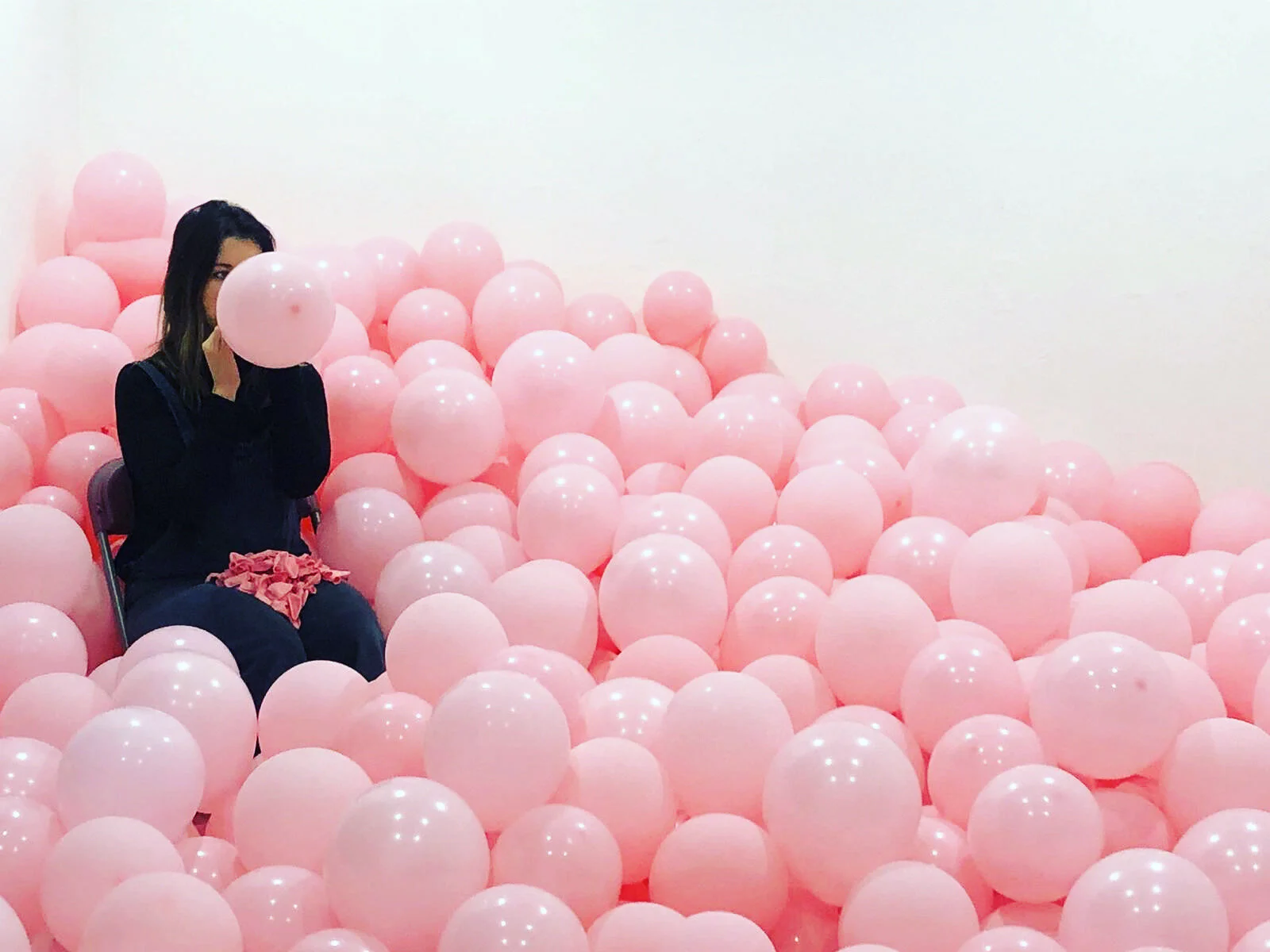
2020, Endurance performance-sculpture, 12 hours of the artist’s exhalations captured in 1000 balloons, dimensions variable, Chelsea Cookhouse Gallery
For 12 hours I capture each of my exhalations in pink balloons. Each balloon contains five exhalations. A self-portrait and a document of time and space, I extend my body into the space around me and use my breathe to create. The balloons become surrogate off-springs, evocative of the body and stretched skin. Their act of creation alluding to pregnancy, reproduction, breastfeeding, the giving away of the self to create, and the repetitive menial tasks and intense physical endurance of early motherhood. For the final minutes of the performance my daughter joined me, seated on my lap, silently passing me the final balloons to inflate.
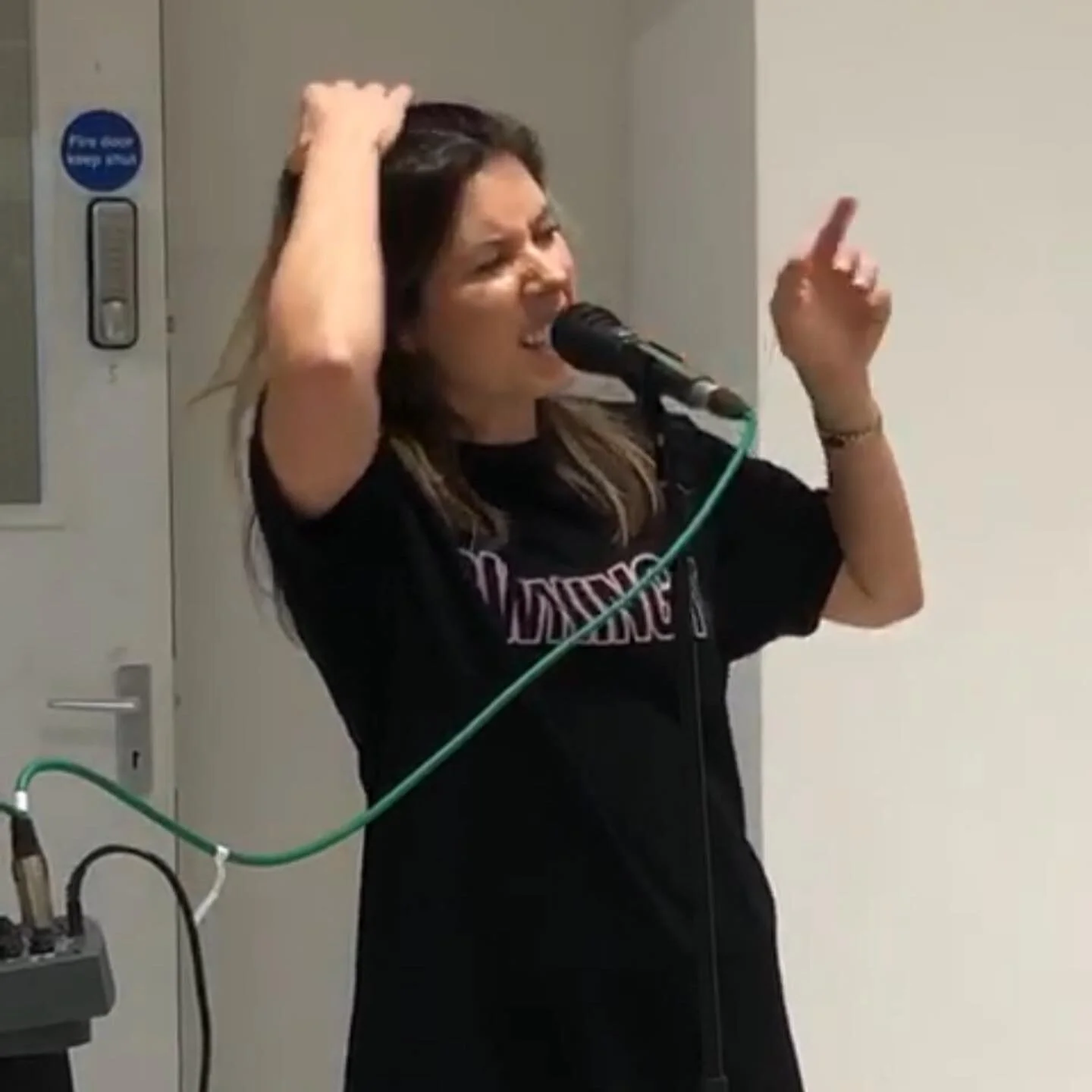
Mad Girls Love Song, 2019, Performance Art Novel & Spoken Word Performance
‘We are mad girls and we feel too much, and stories like these don’t end well for us….
We live in a culture that tells us it is uncool to care too much. That presents the woman who holds feelings for an ex, who still has unresolved questions in her mind, who is still not over it as being not romantic but desperate, needing to be fixed, ‘mad’. These common representations shame silences women from expressing their true stories, articulating their questions, being proud of caring or not being over it. I decided the most radical act might not be to shy away from that but go deep into those unresolved needs, wants and desires. To own them. To be a mad girl…
Starting in October 2018 I went on a year long journey of discovery. Into my old phones and emails. To retrieve old text messages. To work out what happened with us. I made it my mission to understand. What do you do when you have questions but no one will answer them for you: I visited tarot readers, played with white magic, consulted google, interviewed friends. For a year I embodied this position. I pushed my memory to its limits. I scrutinised, analysed. I wrote 80,000 words and once I was done, I wrote this spoken word piece: this is my Mad Girl's Love Song….
2019, Video, 5 minutes 25 seconds
What does it mean to make art once you become a mother, to chose to leave your child to create something that may never be seen? What does becoming a mother mean for your identity? Who even are you anymore? You’re everything I feared becoming. I always knew you’d be like this… My old self and my new self battle it out in a verbal show down.
With visual reference to Tracey Emin’s video art work, The Conversation, 2000, and Conversation With My Mum, 2001, in which Emin explores the decision as an artist and woman to not have children, In Conversation Between My Old and New Self, I explore the less spoken about –but no less complex and contentious – reality of the effect of having children on the self and identity of a female artist.